
Hardwood, Laminate or Vinyl Plank: Flooring for Real Life
Practical guidance to choose the right floor for life in Oakville homes and similar climates.
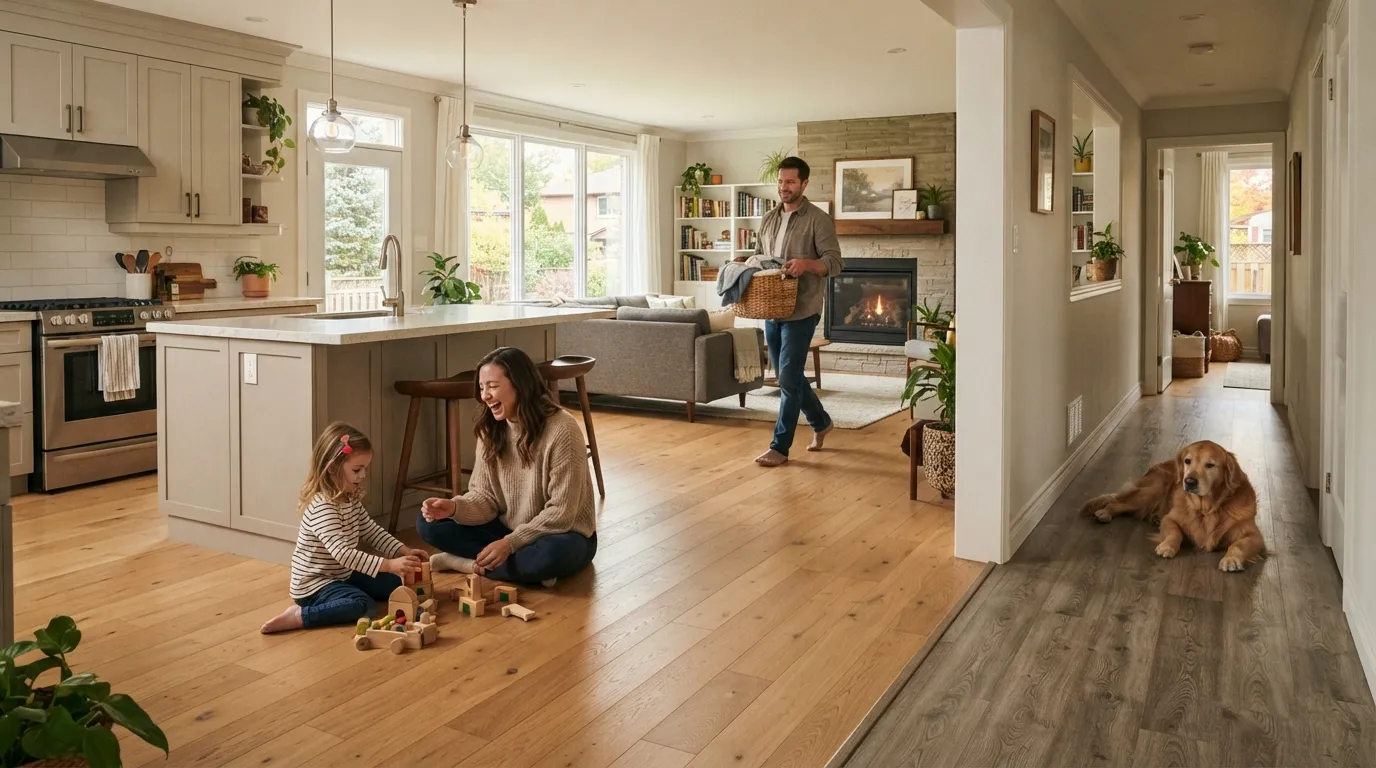
Which flooring type is best for everyday living in my home?
Choose based on where the floor will go, how you use the room, moisture exposure, and how long you expect the floor to last—hardwood for long-term value and repairability, laminate for budget-friendly wear resistance, vinyl plank for moisture-prone areas and easy maintenance.
Hardwood – natural, repairable, climate-sensitive
Solid or engineered hardwood brings long-term value and can be sanded and refinished multiple times. In Oakville's seasonal humidity shifts, engineered hardwood is usually more stable than solid plank on below-grade or radiant-heated floors. Expect higher upfront cost but strong resale appeal in neighborhoods across Halton Region, Burlington and Mississauga nearby.
Laminate – durable surface, budget friendly
Laminate uses a photographic wear layer over a fiberboard core and resists surface scratches and dents well. It handles foot traffic and pets affordably but is not normally suitable for wet basements or areas with regular standing water because the core swells if exposed to moisture.
Vinyl plank (LVP/LVT) – moisture-tolerant and low maintenance
Luxury vinyl plank can mimic wood or tile while remaining waterproof or highly water-resistant depending on core type. It's a practical choice for kitchens, bathrooms, and Oakville's basement suites where moisture and salt from winter footwear are common; some types float while others glue down for extra stability.
Step-by-Step: Hardwood, Laminate or Vinyl Plank: Flooring for Real Life
A homeowner-friendly sequence to evaluate, choose, and install the right floor. These steps cover assessment, product decisions, and the installation/aftercare basics.
- 1
1. Assess the room and use
Measure square footage, note subfloor type (concrete, plywood, OSB) and whether the space is above or below grade. Record typical traffic, pets, sun exposure, and sources of moisture like exterior doors or nearby plumbing.
- 2
2. Prioritize performance requirements
Decide the must-haves: waterproofing, scratch resistance, sound control, or refinishing ability. For example choose waterproof vinyl for an attached garage entry or kitchen mudroom, engineered hardwood for a main-floor living room, and laminate for a busy family room where budget is limited.
- 3
3. Check moisture and subfloor prep
Test concrete for moisture (simple hygrometer or calcium chloride test through a professional) and ensure plywood or OSB is dry and flat. Proper underlayments, vapour barriers or adhesive systems are selected based on the finish type and local building practices—verify with your contractor and local building department in Oakville.
- 4
4. Select materials and get samples
Bring samples home and view them in morning, midday and evening light on the actual subfloor to see how color and gloss read with your home's natural lighting. Compare wear-layer specs for vinyl, AC ratings for laminate, and species/grade for hardwood.
- 5
5. Hire a contractor or plan DIY
Get multiple written estimates and confirm references; ask for examples of similar work in Oakville or nearby Burlington. For DIYers, follow manufacturer's acclimation, layout and expansion gap guidelines—improper acclimation is a common cause of failure.
- 6
6. Protect, maintain and document
After installation, use recommended cleaners and protective pads; track product warranty documents and photos of install as proof if future issues arise. For homeowners in Ontario, retain invoices and photos if you need to consult your insurance or arrange resale disclosures.
Mistakes to Avoid
Small mistakes during product selection and installation become expensive later. Avoid shortcuts on moisture testing, underlayment and acclimation; read warranties carefully and match installation methods to the product.
Skipping moisture checks on concrete subfloors
Installing laminate or hardwood on damp concrete leads to cupping, swelling and delamination. Use a qualified contractor to test and follow manufacturer limits; where moisture is marginal, choose waterproof vinyl or add an approved moisture mitigation system.
Ignoring acclimation and expansion gaps
Wood and laminate expand and contract with humidity. Not giving boards time to acclimate or leaving proper expansion gaps at walls creates buckling and buck strips; follow the specific product installation guide—this is not optional.
Mismatching wear expectations to real life
Buying 'good enough' interior-grade laminate for a high-traffic, pet-filled household is false economy. Look at wear-layer thickness for vinyl, AC or class rating for laminates, and hardwood species/hardness (Janka rating) if durability is a top priority.
Letting installers cut corners on prep
Flatness tolerances and subfloor repairs matter: a squeaky, uneven subfloor shortens product life regardless of finish. Require that installers fix high/low spots, replace rotted plywood, and use recommended underlayments—get this in writing.
What Affects Your Outcome
Several practical factors change cost, longevity and performance.
Room location and moisture exposure
Basement and entryway installations face higher moisture and need water-resistant products or moisture mitigation; upstairs living areas are less risky.
Quality of subfloor preparation
Uneven or damp subfloors cause premature failures; proper prep may add cost but prevents callbacks and product loss.
Product selection and wear ratings
Higher wear-layer thickness, stronger surface finishes, and denser core materials extend life and resistance to pets and furniture.
Installer skill and warranty compliance
Manufacturer warranties often require certified installers or specific adhesives—using unqualified labor can void coverage.
Climate and seasonal humidity
Oakville's seasonal swings and winter indoor dryness affect expansion/contraction; engineered products and proper acclimation reduce movement issues.
Documentation and project timing
Clear written estimates, scope details and photos protect you during warranty claims or if you later sell the home in Halton Region or nearby municipalities.
Frequently Asked Questions
Is hardwood safe for Oakville basements?
Solid hardwood is generally not recommended for basements because concrete and below-grade moisture make it prone to warping. Engineered hardwood is sometimes acceptable if a vapour barrier and proper moisture testing are in place, but waterproof vinyl is usually the safer choice for Oakville basements—confirm moisture limits with the manufacturer and your contractor.
How long does vinyl plank typically last?
Good-quality vinyl plank lasts 10–25 years depending on wear-layer thickness, installation quality and traffic. Heavier commercial wear layers and glued installations tend to last longer; regular cleaning and avoiding abrasive tools extend life.
Can laminate be installed over radiant heat?
Some laminate products are rated for use over radiant heat but you must follow the manufacturer's maximum surface temperature and installation instructions. Engineered hardwood and many vinyl products are more commonly recommended for heated floors—verify the product specification before buying.
How do I choose between engineered and solid hardwood?
Choose engineered hardwood where moisture or dimensional stability matters—over concrete, in kitchens, or on lower levels—because its cross-layered construction resists movement. Solid hardwood is fine on main or upper floors with stable subfloors and provides more possibilities for multiple sandings over decades.
Will installing new floors affect my homeowner’s insurance?
Installing new floors doesn't typically change insurance coverage itself, but you should keep receipts and records as proof of upgrades. If you file a claim later for water or fire damage, insurers may ask for documentation; always check your policy and notify your insurer about major renovations if required.
Do I need a permit to replace flooring in Oakville?
Most straightforward floor replacements are considered cosmetic work and do not need a building permit in Oakville, but structural changes, altering stairs, or changing fire separations in multi-unit homes may trigger permits. Building rules vary—confirm with the Town of Oakville building department before starting work.
Book a free on-site flooring assessment in Oakville
We’ll inspect subfloors, check moisture, and suggest options that fit your lifestyle and budget—no pressure, just clear advice.
Get a Free Quote